
How to Prepare The Chiller for Winter StorageUpdated a few seconds ago
What should you do with your water chiller during the winter?
If temperatures are starting to drop, it's important to prepare your water chiller properly to protect it from potential freezing damage.
Here's how your chiller operates in colder weather, the risks of freezing temperatures, and what we recommend doing before storing your unit for winter.
How the chiller operates
Once your chiller is set up and powered on, you can select your preferred water temperature using the display.
The compressor only operates when cooling is needed. When the water temperature rises above your selected temperature, the compressor switches on to cool the water. Once the target temperature is reached, it automatically switches off or works at a lower voltage.
During colder months, outdoor temperatures may naturally keep your plunge water below your selected temperature, meaning the compressor may not need to run at all. However, the pump continues circulating water through the filtration system, provided the unit remains powered on.
What happens when temperatures approach or fall below freezing?
During short periods of temperatures near freezing, your chiller may continue operating without immediate issues. However, we strongly discourage operating or storing your chiller outdoors in subzero temperatures.
Your chiller is designed to cool water, not heat it or protect itself against freezing conditions. During winter, outdoor temperatures may already keep your plunge water sufficiently cold, so there is generally no need to operate the chiller.
More importantly, prolonged or severe freezing conditions can cause water remaining inside the chiller's internal tank, lines, or components to freeze and expand. This can result in internal cracks, leaks, and potentially irreparable damage.
Even if the chiller is running continuously, this does not guarantee that the water inside the unit will remain above freezing in extreme weather.
As outlined in our warranty terms and the warranty information included in your manual, damage caused by freezing temperatures is considered weather-related damage and is not covered under warranty.
Our recommendation for winter storage
To help protect your chiller from freezing damage, we recommend preparing it for storage before temperatures reach freezing levels.
Follow these steps:
- Disconnect the hoses: Remove the water hoses and fittings connected to the chiller.
- Drain the hoses: Make sure all water is emptied from the disconnected hoses.
- Drain the chiller: Carefully tilt the unit to help remove as much remaining internal water as possible.
- For Chiller 2.0 owners: You must unscrew the drain plug located on the lower-right side of the back of the chiller to release water remaining inside the unit. Please refer to the illustration below.
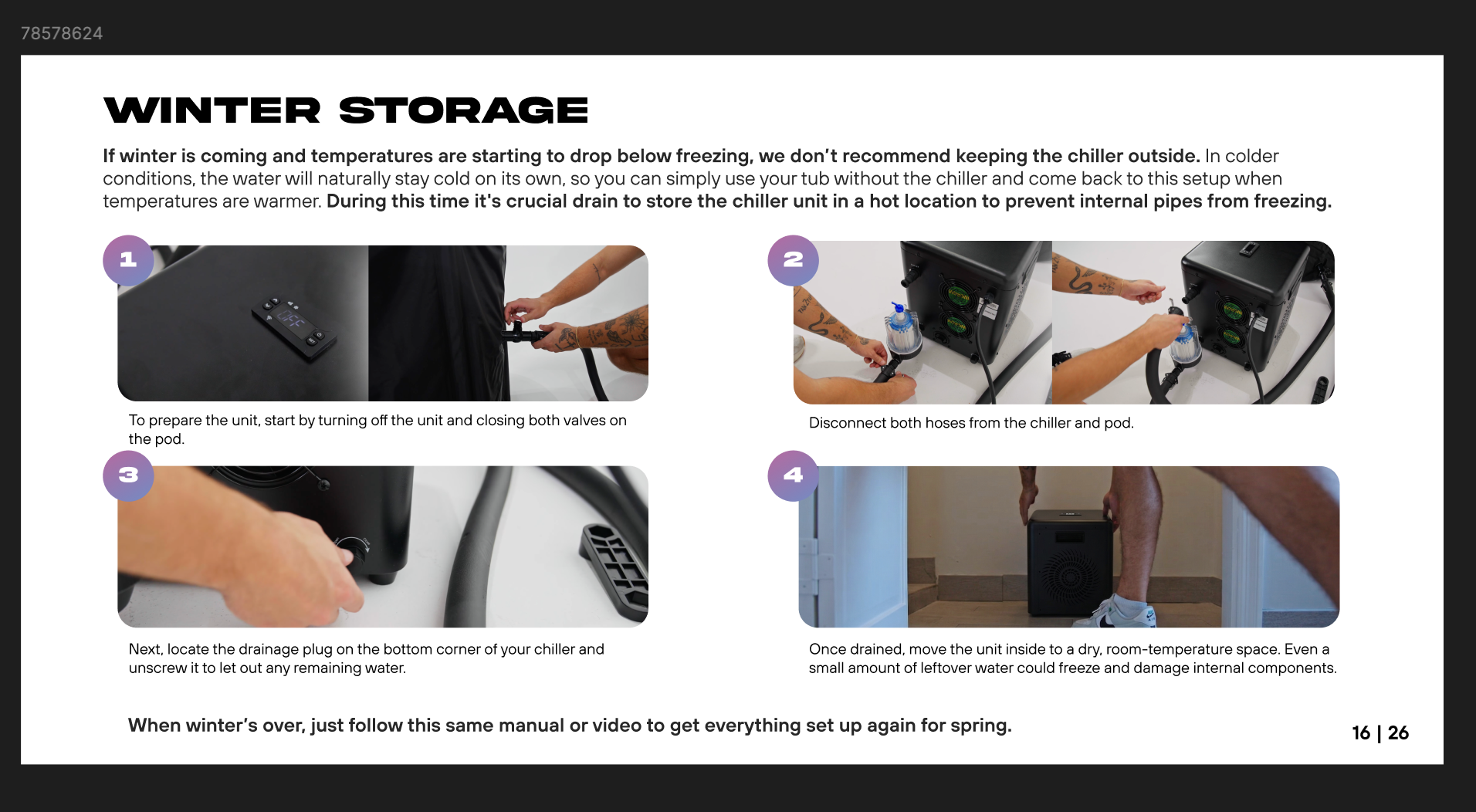
- Allow the unit to dry: Give the chiller time to drain and dry as thoroughly as possible.
- Store indoors: Keep the chiller in a dry, temperature-controlled indoor space where it will not be exposed to freezing temperatures.
Please note: Draining the hoses and tilting the unit helps remove remaining water, but it may not guarantee that every internal component is completely dry. This is why we strongly recommend storing your chiller in a temperature-controlled environment throughout the winter.
What if you choose to keep operating your chiller outdoors?
It's at your own risk if you decide to continue operating your chiller outdoors during freezing weather, but we recommend keeping it powered on and running 24/7 to help reduce the risk of water freezing inside the system.
However, this does not eliminate the risk of freezing or guarantee protection against damage. In particularly harsh or prolonged freezing conditions, internal water may still freeze even while the unit is running.
Any damage caused by freezing temperatures remains outside the scope of the warranty.
A quick reminder
Whenever you plan to stop using your chiller for an extended period, disconnect the hoses, drain as much water as possible, and store the unit indoors in a temperature-controlled space.
Taking these precautions before winter arrives is the best way to help protect your chiller and avoid potentially costly freeze-related damage.